
SmartLipo vs Traditional Liposuction: Which Is Best for You?
SmartLipo vs Traditional Liposuction: Which Is Best for You?
If you have a pocket of fat that has not moved despite years of consistent diet and training, you have probably run into two names in your research: SmartLipo and traditional liposuction. Both remove fat permanently. They differ in how the fat is broken down, what happens to the skin afterward, and how much of your calendar the recovery will take.
This guide explains what separates them, what each one does well, and how the two are often used together rather than chosen between. At SF Bay Cosmetic Surgery Medical Group in San Ramon, both are available, along with a combined approach that very few practices in the country can offer.
The Short Answer
SmartLipo is laser assisted liposuction. A microscopic laser fiber melts fat, seals small blood vessels as it works, and heats the underside of the skin so it tightens. Traditional tumescent liposuction removes fat mechanically through a cannula and is the better tool when a larger area needs to be addressed.
The important detail most articles get wrong is that this is not always a choice. Larger areas can be treated with traditional technique first, then finished with the SmartLipo laser closer to the skin for smoothing and tightening. The right answer for you depends on the volume of fat, the quality of your skin, and the result you want.
What SmartLipo Does
SmartLipo is the most widely used and extensively studied laser assisted lipolysis system available, and it was the first laser introduced for the purpose. A very thin tube containing the laser fiber enters through a tiny incision and delivers thermal energy directly into the fat.
Three things happen at once. The laser melts the fat so it can be removed with gentle suction rather than mechanical force. It coagulates small blood vessels as it goes, which is why blood loss is virtually nonexistent and bruising stays limited. And it heats the surrounding tissue, tightening the skin and improving the smoothness of the final contour.
That third effect is what draws most patients to SmartLipo. Removing fat without addressing the skin above it can leave laxity behind, particularly where skin tone has softened with age. The laser addresses both in one pass.
The procedure uses local numbing only. You are awake, comfortable, and you walk in and walk out. Incisions are placed discreetly and are small enough that no stitches are needed, so there are no visible scars. On average it takes about one and a half to two hours, depending on how many areas are treated and how large they are.
What Traditional Tumescent Liposuction Does
Traditional liposuction uses a cannula connected to suction to break apart and remove fat directly. It has the longest track record in body contouring and remains the most efficient way to address a larger area in a single session.
One point deserves emphasis, because it is the most common misconception about this procedure. Traditional liposuction is often described online as requiring general anesthesia and an operating room. The tumescent technique used at SF Bay Cosmetic Surgery Medical Group is an awake procedure performed under local anesthesia. For patients whose main hesitation is general anesthesia, that changes the calculation considerably.
What traditional liposuction does not do on its own is tighten skin. There is no thermal energy involved, so the skin has to retract naturally. In patients with good elasticity that happens well. In patients with softer skin tone, or after a larger volume is removed, some laxity can remain.
The Combined Approach: Smart Lipo Ultra
This is where the framing of SmartLipo against traditional liposuction breaks down. Smart Lipo Ultra combines VASERlipo and the SmartLipo laser in one treatment. The VASER technology is used first to emulsify and remove fat from larger areas while leaving connective tissue intact, which supports smooth and predictable results. The SmartLipo laser then works closer to the skin to contour and heat the surface so it tightens.
The approach is built for slightly larger areas of fat, or for skin that needs extra tightening once a meaningful amount of volume comes out. Very few physicians in the United States have both technologies and can combine them. If your case sits in the middle, this is often the answer.
Side by Side
How fat is removed. SmartLipo melts it with laser energy, then removes it with gentle suction. Traditional liposuction breaks it apart mechanically.
Skin tightening. SmartLipo heats and tightens the skin as it works. Traditional liposuction relies on natural retraction.
Anesthesia. Both are performed awake under local anesthesia at this practice.
Best suited to. SmartLipo favors small to moderate deposits and skin that needs firming. Traditional technique favors larger areas. Smart Lipo Ultra covers the ground between them.
Bruising. SmartLipo produces less swelling and bruising with virtually no blood loss. Traditional technique involves more tissue disruption and more visible bruising.
Recovery and What to Expect
SmartLipo is designed around minimal downtime. Light bruising is common, and most patients return to normal activity within a day or two, with many back at work the following day. That timeline is one of the main reasons working professionals choose it.
Traditional liposuction asks for more patience. More tissue is disrupted, so swelling, bruising, and soreness are more pronounced in the first week or two, and compression is worn longer to support the skin as it settles.
With either approach, wear your compression garment exactly as instructed, stay hydrated, walk regularly to support circulation, and hold off on strenuous exercise until you are cleared. Following the aftercare plan closely has a real effect on how smooth your final contour looks.
Results and Timeline
Most patients need only one SmartLipo treatment. Visible change often appears within a week, with continued refinement over the following three to six months as swelling resolves and the skin finishes tightening. The final result is not the one you see in the mirror the first week, and knowing that in advance makes the process much easier.
Both procedures permanently destroy fat cells in the treated area. That said, the remaining fat cells throughout your body can still enlarge, so a stable weight and consistent habits protect your investment.
Risks and Side Effects
Both are surgical procedures and both carry risk. Traditional liposuction involves more tissue trauma, which brings a higher likelihood of pronounced bruising, swelling, and, less commonly, contour irregularity or infection. Serious complications such as blood clots are rare but real.
SmartLipo carries a different profile. Because the technique uses heat, there is a small potential for thermal injury, which is why laser settings and technique in experienced hands matter. In exchange, the controlled laser energy limits trauma to surrounding tissue, and most patients report less pain, less bruising, and a faster recovery than with traditional liposuction.
No surgeon can guarantee perfect symmetry, because tissue responds differently from person to person. A thorough consultation that reviews your medical history and sets honest expectations is the most useful safeguard you have.
What Liposuction Costs
Pricing depends on how many areas you are treating, the size of those areas, the technique required, and the complexity of your case. Liposuction is cosmetic, so insurance does not cover it.
Be skeptical of any specific figure quoted online without an examination attached. A quote built from a photo or a phone call is a guess. Your consultation produces a real number tied to a real plan, and that is the only figure worth comparing.
Which One Is Right for You
Start with volume. A defined pocket of fat under the chin, along the flanks, or on the inner thighs is often ideal for SmartLipo alone. A larger area, or several areas at once, usually calls for traditional technique or the combined approach.
Then consider your skin. If your tone is firm and you are treating a modest area, natural retraction may be enough. If you have noticed some laxity, or you are removing enough volume that laxity is likely, the laser component becomes valuable rather than optional.
Dr. Laurena Fotsing considers more than the amount of fat when evaluating liposuction candidates. Skin quality, the location and distribution of fat, overall proportions, and the patient’s expectations all play a role in selecting the appropriate technique. This is why the same procedure is not necessarily the best choice for every patient.
Finally, be honest about your schedule. If you need to be presentable in three days, say so. That constraint legitimately shapes the recommendation, and a good surgeon would rather hear it before surgery than after.
Schedule Your Liposuction Consultation in San Ramon
The most useful next step is to stop comparing techniques in the abstract and get evaluated in person. Fat volume, skin quality, and your recovery window are things a physician has to see before recommending anything.
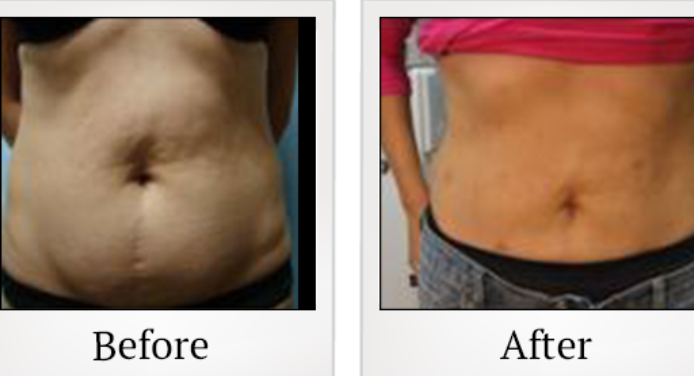
In your consultation at SF Bay Cosmetic Surgery Medical Group, your physician will assess the areas you want treated, explain which technique fits and why, walk you through recovery honestly, and give you a clear estimate. You can also view real patient before and after photos and video reviews first.
Call us at 925-275-9333 or schedule your consultation online. Our office is at 5401 Norris Canyon Rd #312, San Ramon, CA 94583, open Monday through Friday from 8:30 AM to 5:30 PM, and convenient to Dublin, Pleasanton, Danville, Walnut Creek, and the greater East Bay.
Permanently reshape what will not respond to anything else. Start with one honest conversation.
Disclaimer: Results are not guaranteed and may vary from person to person.
Frequently Asked Questions
Am I asleep during the procedure?
How long does SmartLipo take?
Will I need more than one treatment?
When can I go back to work?
Will I have scars?
Does the fat come back?
When will I see the final result?
Can liposuction be combined with other treatments?
How do I know which technique I need?